

I spoke with Elena Verna a short while ago as part of my TPH Spotlight series. She is the Head of Growth at Lovable - the AI-powered app builder that hit $200 million ARR in under a year with fewer than 100 people. Before that: SurveyMonkey for nearly eight years, then Miro, then Amplitude, then Dropbox. She has seen more growth cycles from the inside than almost anyone.
What she said about the state of growth right now was something that took us into a different direction than the human side I focus on in the spotlight series. I am pulling it out into its own piece because I think it is one of the most clear-eyed assessments of the current moment I have encountered, and the product and growth community deserves to sit with it properly.
This is my synthesis of her words on the changing growth playbook and landscape.
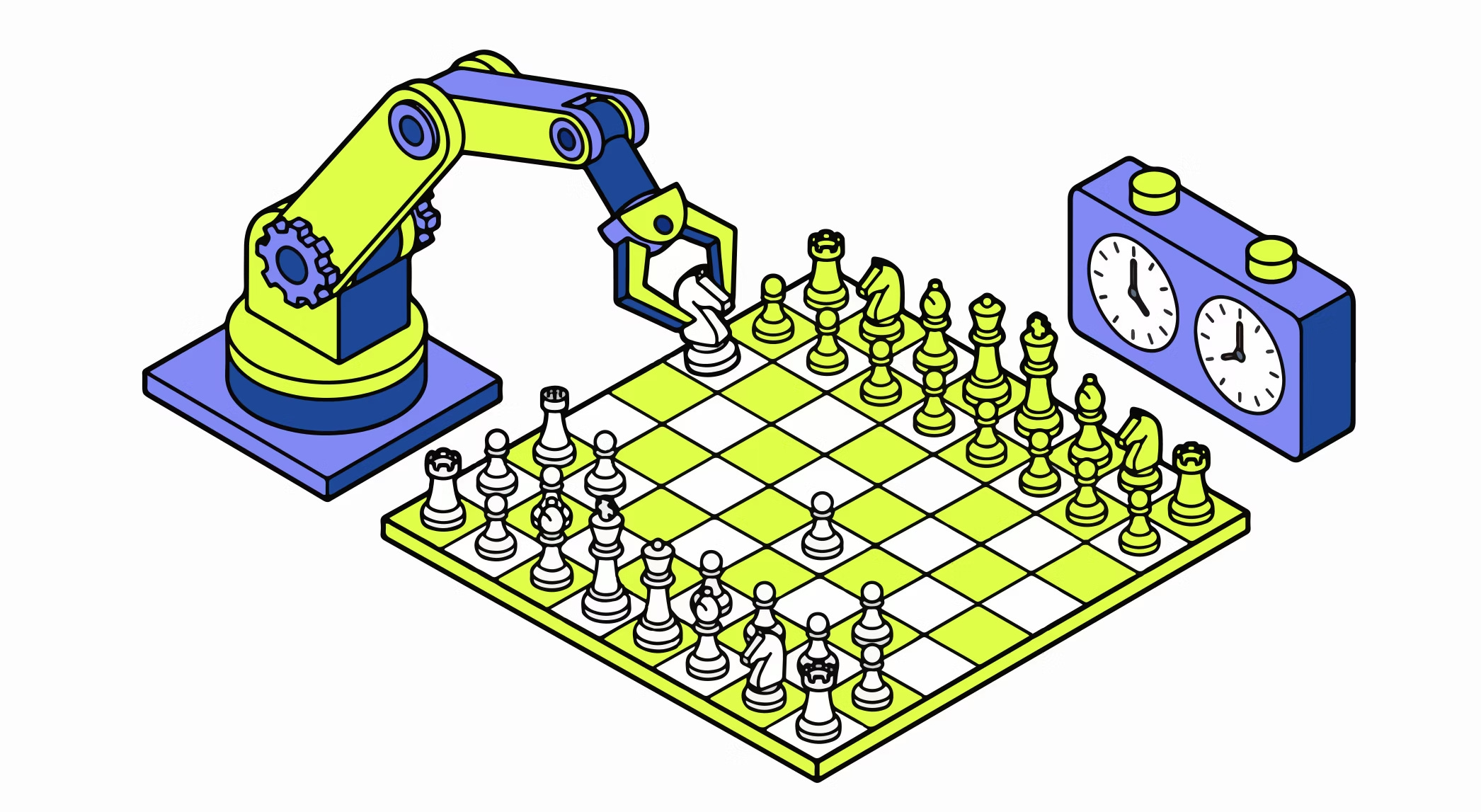
The playbook has a lifespan. This one is ending.
Elena said something on Lenny Rachitsky’s podcast that has been quoted widely since: about sixty to seventy percent of what she learned over fifteen years in growth does not transfer to what she is doing at Lovable.
I asked her to go deeper on that. Her answer was structural, not emotional. Every growth playbook goes through a lifecycle: discovery, adoption, market education, mass adoption, and then localized variations as people optimize it. What she is describing is a playbook that has been in the optimization phase for a long time - and is now running out of road.
“We’ve been stuck on the same playbook of distribution for the last 15 years. There’s not really a new channel that has emerged. Ever since mobile came in as a surface. Ever since social became a big surface. What else did we have that was really new?”
PLG was an innovation, she said - but primarily for B2B, because consumer companies had always relied on the actual product for virality and growth. Marketing and sales were what B2B added to that equation. That was the big insight of the last decade. Now AI is clearing out the underlying assumption that made the thing work.
Feature differentiation is collapsing. That breaks everything downstream.
The growth playbook, in all its forms, has been anchored on a single premise: your product is differentiated at the feature level, and therefore you have something to market. You can make users so excited about that differentiation that they bring others. You can build a funnel around it. Supplementally, you can hire salespeople to articulate it and you can run ads against it.
AI is removing that anchor.
“The speed of development is really accelerating. Most native companies have over 80% of the code written by AI, which means the development process is accelerating so fast that any feature differentiation any competitor can have is being wiped out. Everybody, even non-technical people, are doing surface level optimizations. There’s no more barriers, there’s no more queue to get into engineering.”
The result: if you can build anything quickly, so can everyone else. If a user can build your solution from scratch themselves - which Lovable is directly enabling - the feature advantage disappears almost as soon as you create it.
What does that do to marketing? To sales? To all of the funnels and frameworks and A/B test roadmaps the growth community has built its entire body of knowledge around?
Elena’s answer: it breaks them. When you have nothing to market - because feature differentiation is noise now - your entire distribution playbook collapses with it.
The new moat is trust. Not features, not funnels. TRUST.
This is where the conversation shifted from diagnosis to direction.
If feature differentiation is dying, what wins? Elena’s answer is something the growth community has known in theory for years but rarely prioritized in practice: human connection.
Is that music to our ears or what?!
“People still believe other people. People still want to follow and be inspired by somebody. Relate to somebody. We still have the need for basic human connection.”
Her theory of growth at Lovable - and increasingly her theory for growth in general - is that the best way to win customers right now is not feature differentiation but showing up in front of customers as the builder of the product. Connecting with them. Making the team behind the software visible. Building in public - not as a marketing tactic but - as the primary trust-building mechanism.
She is explicit that this requires every person at the company to be a growth vehicle in some capacity. Not influencers. She rejects that framing. She said when people call her an influencer she finds it genuinely strange because that has never been the goal. The goal is to democratize knowledge, to connect with like-minded people, to be in the same boat working on the same problems together.
But the effect is the same: the team that is most visible, most connected, and most trusted by its customer community is the team that wins. And that team does not win by running a funnel. It wins by being real.
“The companies that will win are not the ones shipping features fastest. They are the ones building the deepest relationships with the people they are building for.”
It’s rewarding to see this theme surface across several key voices in our industry. Ramli John recently mentioned ‘Time to Trust’ as a key metric product teams should focus on in his spotlight. This is a new and beautiful measure of success.
The growth model still matters. You just have to know what yours actually is.
Elena is not saying abandon the craft. She is saying do it more honestly.
She described what she calls a growth model or growth accounting - the ability to answer clearly: what is actually working for us right now? Not what we are trying. Not what we are testing? But, what is actually working?
This can be word of mouth. It can be an efficient AdWords strategy. It can be an outbound sales motion where the SDR team is genuinely good at reaching the right accounts. The form does not matter. What matters is that you know what it is, that you can protect it, and that you understand its lifespan. “Every single growth loop or growth model component has its own lifespan. AdWords efficiency is not going to last forever. At some point there’s going to be too much competition or Google is going to raise prices. So how long do you have?”
She used the SurveyMonkey example to illustrate the long end: the main channel was user-generated content. Someone creates a survey, you take it as a respondent, a small percentage of you convert into survey creators. That loop fueled the business for ten years and got it from zero to sixty million dollars in revenue without significant marketing and sales spend.
And the short end: referral programs like Dropbox’s give storage to get storage - once ninety percent of growth - is now one percent. Those loops have a lifespan. You have to know where yours is in the cycle.
What she is most focused on at Lovable right now is not optimizing existing loops - though she does that - but laying down the foundation for loops that will be optimized a year or two from now. And she is emphatic: you cannot put number expectations on those new initiatives immediately. If a new motion did not produce ARR in seven days, killing it is not a decision. It is a spiral.
“Until you nail down a customer experience that is lovable, that is engaging, that is worth people having a good feeling coming out of it - you can’t put numbers to it. A lot of companies fail because they don’t give that period to anything new they introduce.”
The board problem nobody is talking about.
I asked Elena about something I’m noticing more and more these days. Is there a disconnect between boards and the reality on the ground right now, or are we overthinking it?
She has seen it firsthand kill companies. The pattern: board members with experience in a particular playbook - frequently enterprise, frequently B2B sales motion - walk into a company and start pushing that playbook regardless of whether the company has the DNA, the readiness, or the customer base to execute it. She watched it happen at SurveyMonkey. She has watched it happen at company after company since.
But she said something more useful than just naming the problem. She said the relationship with a board is not one you receive. It is one you manage.
“A lot of the board relationship is to ‘manage up’ the board. It’s like even when you’re an IC, you’re ‘managing up’ your manager. You don’t just wait for them to manage you down.”
The practical version of this:
Be explicit about what is protected and what is being experimented with. Show the board where you expect to see numbers and where you are still finding product-market fit. AND…
Separate those categories clearly and visibly in every reporting cycle. Boards are often more receptive to that framing than product leaders expect - the problem is that most teams do not create the separation, so everything gets measured against the same standard, and experimentation gets killed before it has a chance to work.
She added that a lot of companies choose their board members based on the size of the check or the prestige of the firm, not on actual fit for their stage, their DNA, or their growth model. That choice compounds for years.
Related: What the product leader’s role is actually becoming.
The last thread I want to pull from our conversation is the one about product leadership itself.
Elena said the best product leaders she has worked with had a specific quality: predictability. Not in a rigid way. In a pattern way. You could understand how their mind worked, what they were going to say, how they were going to respond. That predictability created safety and learning for everyone around them.
But she also said something more urgent about the current moment: product leaders who have become pure coordinators - responding to Slack, showing up to meetings, giving opinions - are going to lose their relevance faster than they think.
The only protection against that is staying close to the craft.
“How are you not just becoming a middle manager that is getting disconnected from customers, disconnected from building, disconnected from where technology is going? Especially in the current world where things are changing so rapidly - to not be an IC as a product leader, to be on the forefront of it, to feel those pains, to understand what’s possible - that is where some of it is breaking down.”
She is not talking about micromanagement. She is talking about presence. She said some of her most impactful work at Lovable has been done in an IC capacity, not through a team. And she is excited about a future where you do not have to let go of your craft in order to increase your impact. AI is making that possible.
The leaders who are going to thrive are the ones who hold both - the organizational view and the craft - at the same time. The ones who let go of the craft to manage it from above are going to find the ground shifting beneath them faster than they expected.
What to take from this
I am not going to wrap this in a clean list, but here’s a sort of framework that requires you to do your own honest accounting that came out of this conversation:
What is your actual growth model right now? Not what you are trying? But, what is working?
Where is that model in its lifecycle - early, scaling, or beginning to plateau?
What are you laying the foundation for that you are not yet allowed to put number expectations on?
Is your board or leadership relationship one you are managing, or one you are waiting to receive?
And as a product leader: are you still doing the work, or are you coordinating the work? Because those are not the same thing anymore, and the gap between them is growing.
The playbook is not dead. It is just different from what it was. And the most important thing you can build right now, in any of your growth motions, is trust with the actual humans you are trying to serve.
Everything else is temporary.
This piece is drawn from a longer conversation with Elena Verna for TPH Spotlight series. The full human piece - her origin story, the dance studio in Russia, and the imposter syndrome she turned into a superpower - is published separately here.