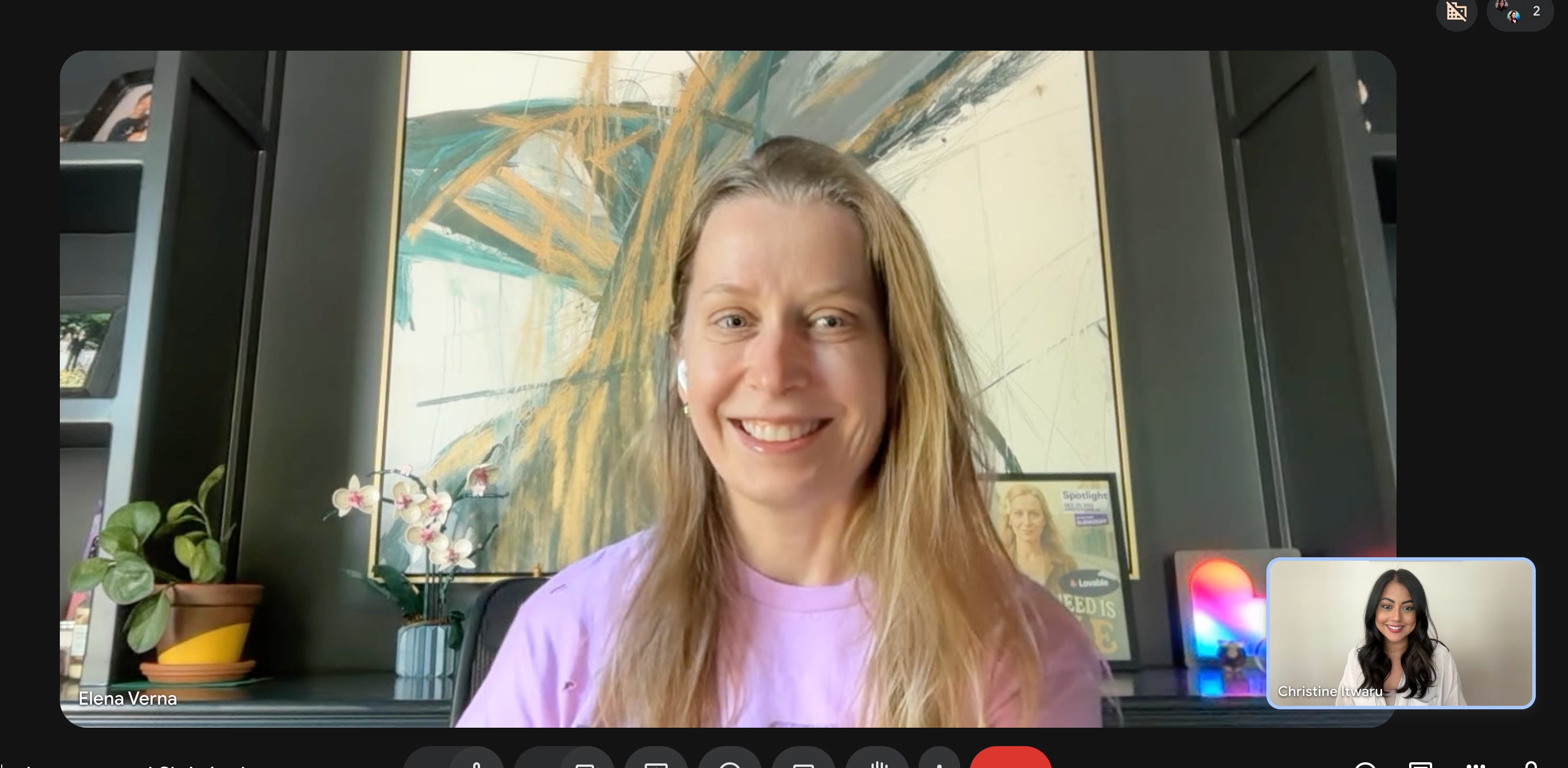
When we got on the call, I could think of nothing coherent to say for a good 10 seconds. All I could do was say to her I’m not sure why she said yes. She said, ‘It’s important to you. Why wouldn’t I?” She put me at ease. With 7 words, and in under 15 seconds. Those numbers matter to me more than you’ll all ever know.
I have been talking to, and writing about product people for a while now, and this series exists because I believe the humans behind the work matter as much as the work itself - even more than the work. When someone agrees to sit down with you and what comes out of the conversation is bigger than what you came for, you have to just thank the Universe.
Elena Verna is the Head of Growth at Lovable, one of the fastest-growing companies in the history of the industry. She has led growth at SurveyMonkey, Miro, Amplitude, and Dropbox. She has advised and coached more teams than she could probably count.
She is one of, if not the, most referenced voice in growth anywhere in the world.
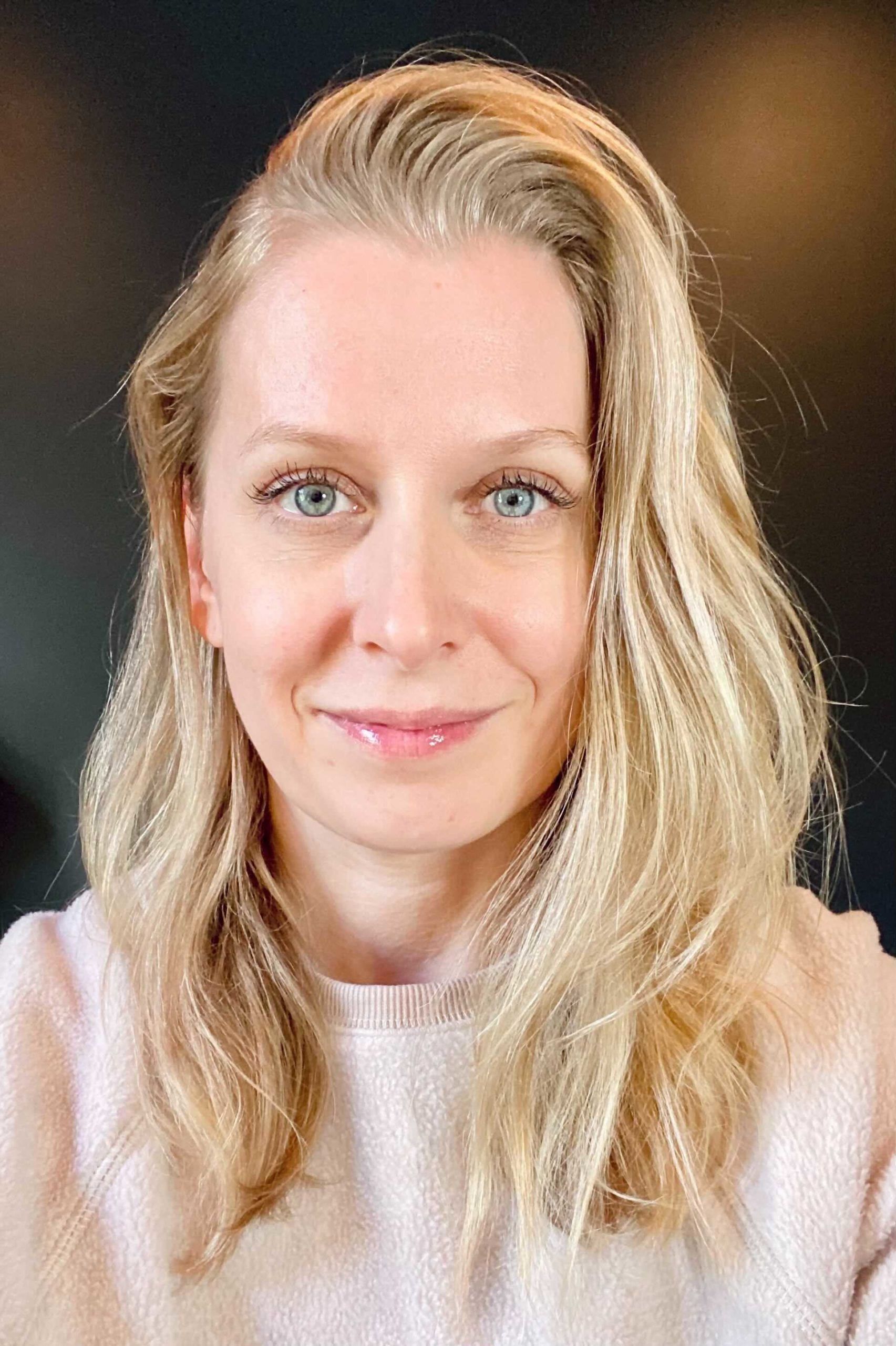
Elena got here from Russia with a hundred dollars she did not have, a statistics degree she stumbled into, and a dream that had nothing to do with any of this.
The rest of the words after the 7 above will matter to every product heart. Here is Elena’s story.
Education and Professional Highlights
Currently: Head of Growth at Lovable - AI-powered app builder that hit $200M ARR in under one year with fewer than 100 people. Currently sitting at $400M ARR, adding $100M a month for the past several months.
Before that: Growth leadership at SurveyMonkey (nearly 8 years), Miro (through hypergrowth during COVID), Amplitude, Dropbox. Advisor and consultant to dozens of high-growth companies.
Teaching: Partner at Reforge. Created courses on Growth Leadership, Experimentation and Testing, Monetization and Pricing, and Product-Led Growth.
Writing: Substack - Elena’s Growth Scoop. Tens of thousands of subscribers. The Confessions post is why this interview exists.
Originally from: Russia. Came to the US in 2001, in high school, speaking no English.
Education: Statistics, UC Berkeley - via community college, one application to Stanford she could not afford to repeat, and finishing an entire year of coursework in one semester to not lose a job offer.
Early “dream”: Dance instructor at the competitive studio where she trained for years as a child. Not kidding. Not a detour.
Where She Came From
Elena grew up in Russia in the 1990s, which meant growing up in the middle of a country breaking apart. The shift from communism to something else - democracy in name, chaos in practice - was not abstract for her family. She watched her mother’s savings collapse in real time during the inflation spike that wiped out entire generations of accumulated wealth. Money that had been enough to buy an apartment became enough to buy a washing machine became enough to buy a loaf of bread, all within weeks.
What that does to your sense of what is possible is hard to overstate. It does not make you ambitious. It makes you careful. It makes the world of possibilities feel very small.
Her dream, before any of this career existed, was to be a dance instructor at the competitive studio where she trained after school. They had competitions across cities. The training was vigorous. She loved it. That was the plan. Not tech. Not growth. Dance.
Then she came to America at high school age, speaking no English. And suddenly the only subject that still made sense to her was math - not because she loved it, but because it was the one thing that did not require language. In Russia she had been falling behind in math. In America, where the curriculum was two years behind what she had already studied, she was suddenly ahead. The one constant in a world where everything else had been scrambled.
“It became the constant that I understood. As opposed to everything else that kind of fell apart around my life and around what I knew and what I was good at.”
She applied to one college. Stanford. The application cost a hundred dollars, which she did not have, and she was rejected. She went to community college, transferred to UC Berkeley, and finished a full year of coursework in a single semester because a job offer at Safeway - her mother had gotten her an internship there - was contingent on her starting in January. She did it. She got the diploma in May, started the job in January, and did not look back.
There was no plan that led logically to the next thing. There was just Elena, showing up, grinding through, and grabbing every opportunity that appeared in front of her because the world she came from had taught her that opportunities are not guaranteed and waiting is not a strategy.
She said something in our conversation that I have been thinking about ever since: the theme of her life has been I will figure it out. Not “I have a plan”. Not “I know someone”.
“I will figure it out.”
And she has, every single time.
How Product Found Her
Safeway was her first job. It was her mother’s idea. She ended up working on a personalized coupon algorithm, applying statistics to actual customer behavior, and thought for a moment: this is interesting. This is real world application of everything I have been learning.
And then she spent two years watching that project not move. The timeline to test the model in real life was eighteen to twenty-four months. She sat in the meetings. She listened to people tell her this was fine. She sat in her cubicle thinking she was wasting the most important years of her learning life.
So she went on Craigslist - this was 2007, 2008 - and started applying to other jobs. This is the actual origin story of one of the most influential growth careers of the past fifteen years. A bored statistician on Craigslist.
What followed was a journey she describes as entirely exploratory, not planned. SurveyMonkey, where she would spend nearly eight years and where everything clicked. Miro through COVID hypergrowth. Amplitude. Dropbox. And then, after Dropbox, she was genuinely considering stepping back. Maybe advising. Maybe slowing down. She had earned it.
Then someone connected her to the CEO of Lovable.
Five months of contracting. Then full time. Now eight months in, and she says every month feels like a completely different company. The velocity is unlike anything she has experienced.
None of this was the plan. There never was a plan.
The Thing Nobody Talks About
Elena shared something in our conversation that I think is the most important part of this piece, and I want to give it the space it deserves. Every single product person will feel this.
She has had imposter syndrome her entire career. Not quietly, not occasionally. Intensely, for years, rooted in the deep sense that she did not come from this world, did not belong in it, and would be found out eventually. She always over-prepared. She always wanted to feel certain before she raised her hand. She worked twice as hard to get to a knowledge space that other people seemed to occupy more easily, more confidently.
“I’ve always had a huge imposter syndrome because I don’t come from this universe. I stumbled into this. And I always wanted to feel that I’m very knowledgeable before I even raise my hand and say something or take on something.”
What changed it - slowly, over many years - was watching the people around her. Watching how often some were wrong. Watching how little it seemed to cost them. Watching confident people overpromise and underdeliver and then move on without apparent consequence, while she was still triple-checking her own work before she would say a word.
She said the realization came gradually, maybe fifteen years ago, maybe ten: nobody actually knows what they are doing. Everyone is figuring it out. The bar she had been trying to hit was not the real bar. It was a performance. And she had been comparing her internal experience to everyone else’s external one.
But here is the part she said that stopped me. She does not frame the imposter syndrome as something to have overcome. She frames it as one of her biggest superpowers. Because it kept her humble. Because it kept her learning. Because it kept her from performing confidence she had not yet earned, which meant that when she did speak, she had something real to say.
“I’ve never been confident on anything around my career. But I do think that the imposter syndrome that I had has been one of my biggest superpowers. It’s kept me humble and really leaning into where I can grow.”
She also said something about passive language that I want to share because I do not think it gets discussed enough. She talked about Adam Grant’s writing on how women use passive language to navigate environments where assertiveness reads as aggression. She said she still abides by it, consciously, because she has tested both approaches and knows how much more she can get done when she delivers things in a way that brings people along rather than triggers their defenses. That is not a weakness. That is precision.
What Made Her Write It
A few days before we spoke, Elena published something on Substack that rippled through our community in a way I had not seen in a long time. She wrote that a lot of what she had spent the past decade learning was losing leverage. That growth, marketing, product management had felt like crafts. That you built intuition over years. That you earned judgment by grinding through it all.
And then she watched a twenty-two-year-old produce a suspiciously solid version of it in fourteen minutes. And there was no mourning period. You just move on, because everything is moving too fast.
I told her that post was part of why I reached out. She told me what it felt like to publish it.
“It was very uncomfortable. I had a lot of anxiety feelings before posting it. I thought people would tear me down for it. Like, you’re supposed to be the growth leader at this AI company. What do you mean you’re feeling this way?”
She said every single post is dreadful to publish. The moment she clicks that button is the most anxiety-inducing moment of her week, every week. She is putting something out to be judged without being able to provide additional context. It does not get easier.
But she published it anyway because she thought: nobody is saying this. Nobody is saying out loud that they are scared, that they are behind, that this is hard. And the professional world rewards confidence, not the more human things - the adjustment, the processing, the acceptance of what is actually happening.
The response was enormous. Thousands of likes, hundreds of shares and comments, people saying: finally, someone said it.
She was not surprised by that. She was surprised by how few people at her level had been willing to say it first.
Being Humbled, and Continuing to Learn
She shared a little story about her son. He was watching a World War I documentary and asked her if she was alive then. She told me this the same way I tell it about my own kids - with that combination of laughter and horror that only parents of a certain age understand. Being asked if we’re from the 1900’s is a special kind of humble pie slice.
And then she said something that I think quietly ties together the whole arc of what she shared in our conversation. She talked about giving herself space to learn. About blocking time to just go explore something new - Firecrawl, in her recent example, because she kept hearing everyone talk about it and finally just went and tried it and understood it. About how that exploration is slow and sometimes produces nothing and you have to go back to the old way anyway. About how nobody has time for that, and she protects it anyway.
Because the thing that made her great at this craft in the first place - that grinding willingness to figure it out, that refusal to pretend she knows something she does not, that pattern of show up and absorb everything available - that is still what she is doing. Even at Lovable. Even now. Especially now.
“We just have to give ourselves a little more grace and not get fooled by these people posting about beautiful automations. In some areas it has been proven. The rest of it is completely bullsh*t as far as I’m concerned.”
That is the Elena Verna thesis, condensed. The work is real. The hype is not. Stay close to what is actually true.
The People Who Changed Everything
Elena named a few people who I want to acknowledge here because the way she talked about them was different from how people usually answer this question.
Brent, her first great manager at SurveyMonkey, who pushed her toward what excellent looks like and showed her how to get there.
Selina, the CTO and Head of Product at SurveyMonkey, who Elena described as someone she still reverse-engineers. Still great friends with her. Still learning from the years they worked together.
Dave Goldberg, the CEO of SurveyMonkey, who was still small enough when Elena joined - employee twelve - that he could develop a real relationship with someone at every level of the org. She carried what he gave her for years after he was gone.
She also said some of the people she considers her most important mentors reported to her. Eric, from her analytics team, is one. She still respects how he thinks more than almost anyone. She went out of her way to say that mentors do not have to come from above. Some of the most important ones are just people who are really, really good at something, and you are paying enough attention to learn from them.
That framing tells you so much about how she built the career she built.
What She Values and What She Won’t Sell
I asked Elena about her non-negotiable values and she answered with something I have not heard in any of these conversations before.
She said: “I will never sell myself more than what I am capable of doing.”
She told me about her first few months at Lovable, when she was asked to run marketing alongside growth. She has been a CMO. She has done real marketing across every discipline. She knows the work. And she went to the CEO and said: “You need to hire a head of marketing. It is not me. I know that there are better people for this position.”
Most people would not do that. Most people, given the opportunity to run something big at a company moving that fast, would take it. She did not. Because she is not interested in taking on things she cannot do at the level they deserve. She wants to be where she is actually excellent, and she will protect that standard even when the opportunity is right in front of her.
“The biggest impact I can make in this industry is not on the value I generate for one company. It’s on the learnings I can propagate. That is how I measure impact - not by how much money the company has earned, but by how many lives I can make a little bit better.”
And another one: “Always be learning.”
She evaluates her job and her position based on whether she is still growing personally inside it. If the answer is no, she pays attention to that. She has always paid attention to that.
What She Wishes Someone Would Ask
I always end with the same question. What do you wish someone would just ask you that nobody ever does?
Elena thought about it and then she flipped it on me (panic hit for a second). She said what she wishes people would stop asking is: “What do I need to do to get to where you are? How do I become you?”
“I don’t know. This was not a fu****g plan. People just want shortcuts and I think people don’t realize that none of what I’ve done has been achieved by a shortcut.”
There were lucky breaks. There were right-place-right-time moments. There were introductions that mattered and mentors who showed up at the right time. She is not pretending otherwise. But every single one of those moments required her to have already been doing the work. To have already been prepared. To have already been the person who would know what to do with an opportunity when it arrived.
What she wishes people would ask instead: “Given my superpowers, what is my potential? How do I craft a path to where I actually want to go?”
That question requires self-knowledge. It requires honesty about what you are actually good at versus what you wish you were good at. It requires the kind of work that does not look like work - the quiet, patient, grinding process of learning who you are and what you can do and then going and doing it.
This is what she has been doing since the dance studio thoughts in Russia. Since the cubicle at Safeway. Since the community college. Since the hundred dollars she did not have.
She figured it out.
Every single time.
You can find Elena Verna on LinkedIn and at elenaverna.com. Her Substack is Elena’s Growth Scoop, and if you have not yet read the Confessions of a Millennial in Tech post, go read it.
Elena - thank you. I am still not entirely calm about you saying yes. This conversation was everything.