

There are people you meet in this space who remind you exactly why you started writing about it in the first place.
I first connected with Mackenzie Hughes the way most of us find each other in this world - through LinkedIn, through shared corners of the product and prodops universe, through the kind of conversation that starts professional and quickly becomes something more honest than that. When we sat down to do this interview, I was already pumped before we even started. She gives me a ton of hope for what’s to come in our space if we learn to balance human and the chaos ahead of us. Mackenzie has a way of making you feel like anything is possible - not through empty hype, but through the clarity she brings to everything she touches. She is one of those people who makes you feel seen and energized at the same time, and that is not a small thing.
She is the co-founder of GoldHue, a fractional product executive duo for Tech CEOs navigating tough markets. Before that, she spent years building out product operations at places like Electric and Instructure, earning a reputation as someone who thinks about the whole system, not just the parts in front of her. What makes Mackenzie different is not just the work. It is how she thinks about the work, and what happens when that thinking spills over into the rest of her life.
Because with Mackenzie, it always does.
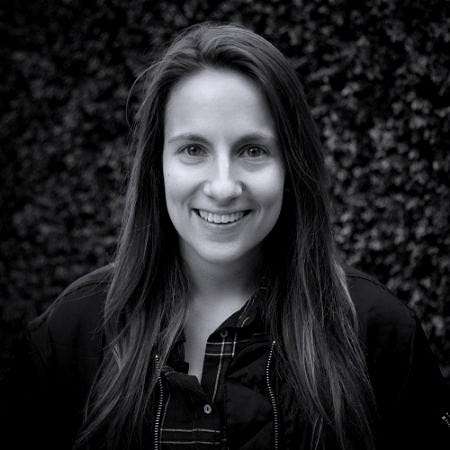
Education and Professional Highlights
Co-Founder: GoldHue - a fractional product executive duo for Tech CEOs. They embed into leadership teams to solve the operational problems slowing the company down, so they can focus on winning the market.
Originally from: Long Island, New York (woot), where she spent the first 17 years of her life before heading to college and eventually moving through North Carolina, Massachusetts, California, and now Jersey City, New Jersey.
Education: SUNY Purchase - Psychology, with as many art classes as she could fit in.
Roles: Political campaign organizer, startup sales lead, customer success manager, product operations manager, and now co-founder.
Where She Came From
Mackenzie vulnerably shared that she did not know she was neurodiverse until a couple of years ago. Looking back at her childhood on Long Island, though, things start to make a lot of sense. She describes herself as the youngest of three kids in a close family, the funny one, the performer. She was the kid who kept everyone laughing while quietly figuring out how to navigate a world that did not always make her feel like she fit neatly into it.
School was hard. She daydreamed. She struggled in ways that went undiagnosed and unexplained, which meant she carried more than she needed to for a long time. But she also built something in that time - a close group of friends she has known since she was three years old. People she still talks to today, a collective memory that stretches back to pre-K and holds strong.
“Most people don’t have that.”
She knows it. That kind of continuity shapes you.
When she got to college, things shifted. She figured out how she actually learns - a theme I keep hearing from the people I have written about so far. She exceeded. She took psychology classes and fell in love with understanding why people do what they do. The therapy track was going fine until someone explained that it would require a PhD. Mackenzie looked at that road and thought, there has to be another way to help people on a bigger scale.
She started doing something that would turn out to be a preview of her whole career: she started working on campaigns. Not because someone told her it was the path. Because it felt like impact. Because it felt like it mattered. She got shipped to Colorado to work on the Obama campaign in 2012, running somewhere between 80 and 100 hours a week when Colorado was a swing state, and she describes it with the kind of nostalgic joy that only comes from surviving something that was completely, magnificently chaotic.
“It was nonstop. And I was running campaigns all over the country.”
Afterwards, she leaned into campaigns for Planned Parenthood and the ACLU. But she burned out. She tried PR for a minute, hated it, and then got a call from a friend about a tiny startup building something like a LinkedIn for workforce development programs. They were heading to an incubator in San Francisco and she asked herself if she really wanted to do this.
She said yes. Of course she said yes.
How Product Found Her
As we all know, San Francisco in 2014 and 2015 was its own kind of madness. Just picture Silicon Valley when you read this. Everybody had a startup. Money was flowing. The energy was electric and slightly delusional in the best way. Mackenzie dove in, worked her way through a few small startups, and eventually landed at WorkMarket, where she would stay for five or more years and where the real story begins.
She started in support. Moved to customer success. Got really good at it. And then got really frustrated by it.
“I couldn’t do enough for my customers. And I started getting interested in product.”
This moment is worth sitting with, because it is the same moment so many of the best product people I know describe. It is not that they woke up wanting to be a PM. It is that they kept running into walls on behalf of the people they served, and they needed to get to the other side of those walls. That restlessness is not a liability. It is the whole prerequisite.
She began setting up what would eventually be recognized as product operations - without knowing the name for it yet, without a job title that matched, without a playbook. She got certified in product management through General Assembly and found mentors. She started building the function from the inside out, which is something I know a lot of you feel as you read this.
And then there was a role at Electric, and the title finally caught up to what she had already been doing, and that was that.
Product Is a Way of Life
This is the part I most wanted to get to with Mackenzie, and she did not disappoint.
I asked her whether the way she thinks about problems at work has ever shown up in her personal life in ways that surprised her. She did not hesitate for a second.
“All day. Product is essentially thinking about the ROI of things and constantly making trade-offs in your head.”
She talked about how decisiveness has become a core part of who she is, something people in her life notice immediately. Her partner, her friends - they will all tell you that Mackenzie moves. She does not agonize over small decisions because she has internalized something most people spend years trying to learn: most decisions can be undone, redone, iterated on. The skill is knowing which decisions actually require deep work and which ones just need you to choose a lane and go.
“That is product, right? Prioritizing. Knowing what is important and what is not. Knowing when to move and when to slow down.”
I asked whether she has ever caught herself doing user research on the people she loves - she laughed and got immediately honest.
“So much so that it is a struggle for me.”
She described herself as someone who is constantly trying to understand why people behave the way they do. She thinks about it like a Myers-Briggs split: she is deeply thinking over feeling, and she knows it. She is always watching, always asking, always trying to understand the mechanics behind a decision.
But there is more to it than intellectual curiosity. Mackenzie is a Queer Woman and neurodivergent, and she is candid about the fact that this combination helps shape how she moves through the world. She did not grow up with a default path laid out for her, so she has had to ask questions that many people never think to ask. Why do people make the choices they make? What assumptions are baked into the paths we are supposed to want? What else is possible?
The hypervigilance she grew up with - that alertness, that constant scanning of the room - turned out to be an asset when she learned to direct it intentionally. In operations work, it looks like thinking through every downstream consequence of a major process change, leaving no stone unturned before rolling something out to a team. For smaller things, she lets go. She knows the difference between a canceled flight and a delayed one. She knows which gate needs her attention.
That distinction, by the way, is not just a metaphor. It is a craft.
What the Space Needs Right Now
Mackenzie has been thinking hard about this, and I want to give you her take in full because it is worth sitting with.
On the soft side, she posted something not long before we talked that captures it perfectly: We never had control of anything. Control was always an illusion. The skill that will separate the people in product who thrive from the people who panic is the ability to sit with discomfort, to stop reaching for certainty in a space that is designed to keep moving. That mastery, she said, is what she would tell every product and operations professional to invest in right now.
On the hard product skills side, she was equally clear - and this is where I want you to pay attention, because she is naming the gaps she sees across the teams she works with every day.
First: commercials.
Every product person needs to know four things about their product:
how much revenue it generates
how much it contributes to retention
what engagement looks like
whether there is a margin story
That is the heat map. Green, yellow, red. She uses an analogy I love: you do not run an airport by walking up and down checking every gate. You go to the board. You find the canceled and delayed flights, and you go fix those. If you cannot look at your product portfolio and immediately know where the problems are, you are not operating, you are reacting.
This matters more now than it ever has. As headcount shrinks and expectations rise, the product people who survive and lead are the ones who can walk into any room and speak the language of the business without needing a translator. That is not a soft skill. That is table stakes.
Second: the nature of software itself is changing.
Not enough people are thinking about it honestly. Mackenzie believes software needs to get more opinionated. The era of presenting users with a wall of options and calling it flexibility is coming to an end. People do not operate that way. What is coming, she thinks, is software that meets you where you are, that fits into your day rather than asking you to fit into it. Served-up prompts. Context-aware experiences. Products that know what you need before you have to navigate five menus to ask for it. If you are building B2B SaaS right now and your product requires a 45-minute onboarding call to explain, it is time to ask harder questions about what you are actually shipping.
Third: storytelling.
Be still my heart. Always. It never goes away. She has watched people who struggled to communicate transform when they are finally able to visualize what is in their heads. The idea does not change. The ability to make someone else see it clearly - that is the whole game. And here is the thing about storytelling that does not get said enough: it is not a presentation skill. It is a thinking skill. If you cannot tell the story clearly, you probably do not have the strategy clearly yet either.
On AI specifically, she was blunt. The problem right now is that teams are spinning up tools in isolation, without thinking about the ecosystem. Compliance issues, security gaps, fragmentation - these are the operational headaches nobody is accounting for. The consumption-based pricing models that most AI tools have adopted are not working for enterprise environments where usage is unpredictable and procurement cycles are slow. A little bit of research there for anyone looking at policy and procurement as we evolve - this pricing model does not work for everyone, and vendors are going to have to reckon with that.
Where does AI help her? Like many of us, Mackenzie is building things she could not have built before. She is creating custom project management systems for clients without having to contort herself around someone else’s software. She described tools like Lovable the way people describe something that has genuinely changed their workflow - not as a trend to perform enthusiasm about, but as a real answer to a real problem she had. She also noted that Lovable solves the storytelling problem for the people who need to visualize but have not been able to - and that is not nothing.
The People Who Changed Everything
Mackenzie wanted to recognize two people specifically, though I could tell she had more in mind.
The first is her former boss at Electric, Tara Goldman, who is now her business partner at GoldHue and her best friend. The moment she shared was about a raise - she asked for a significant one, and Tara came back with more than she had asked for, then told her: good job advocating for yourself. It sounds small. It is not small. Someone did something similar for me once, and it changed how I saw myself at work. It is the kind of thing that teaches you that asking for what you are worth is not a negotiation tactic. It is just honesty. And the leaders who respond to it that way are the ones worth following.
The second is her partner, Allison.
Allison believes in Mackenzie at a level that Mackenzie still seems a little amazed by. Her eyes lit up when she tried to tell me more. They met eleven years ago, and Mackenzie talked about her the way you talk about someone who has stayed steady through every version of you. It is my belief that the person you choose to walk this planet with is going to make or break almost everything, and Mackenzie was fully aligned.
What She Wants As Her Mark
I asked Mackenzie what she wants people to feel when they have worked with her, learned from her, or read something she has written. She sat with it for a second.
“I would love for people to feel like anything is possible. Being really excited. I want to leave people with that ounce of joy and excitement.”
In this world right now, where the news is relentless and the uncertainty is real and the pace of change does not slow down for anyone, she wants to be a small pocket of hope. A reason to feel something good.
She is the reason I felt compelled to write more of these spotlights of the humans behind Product in the face of AI.
Mackenzie Hughes is the co-founder of GoldHue. You can find her on LinkedIn and follow along with what she and Tara are building. Go introduce yourself. Tell her I sent you.