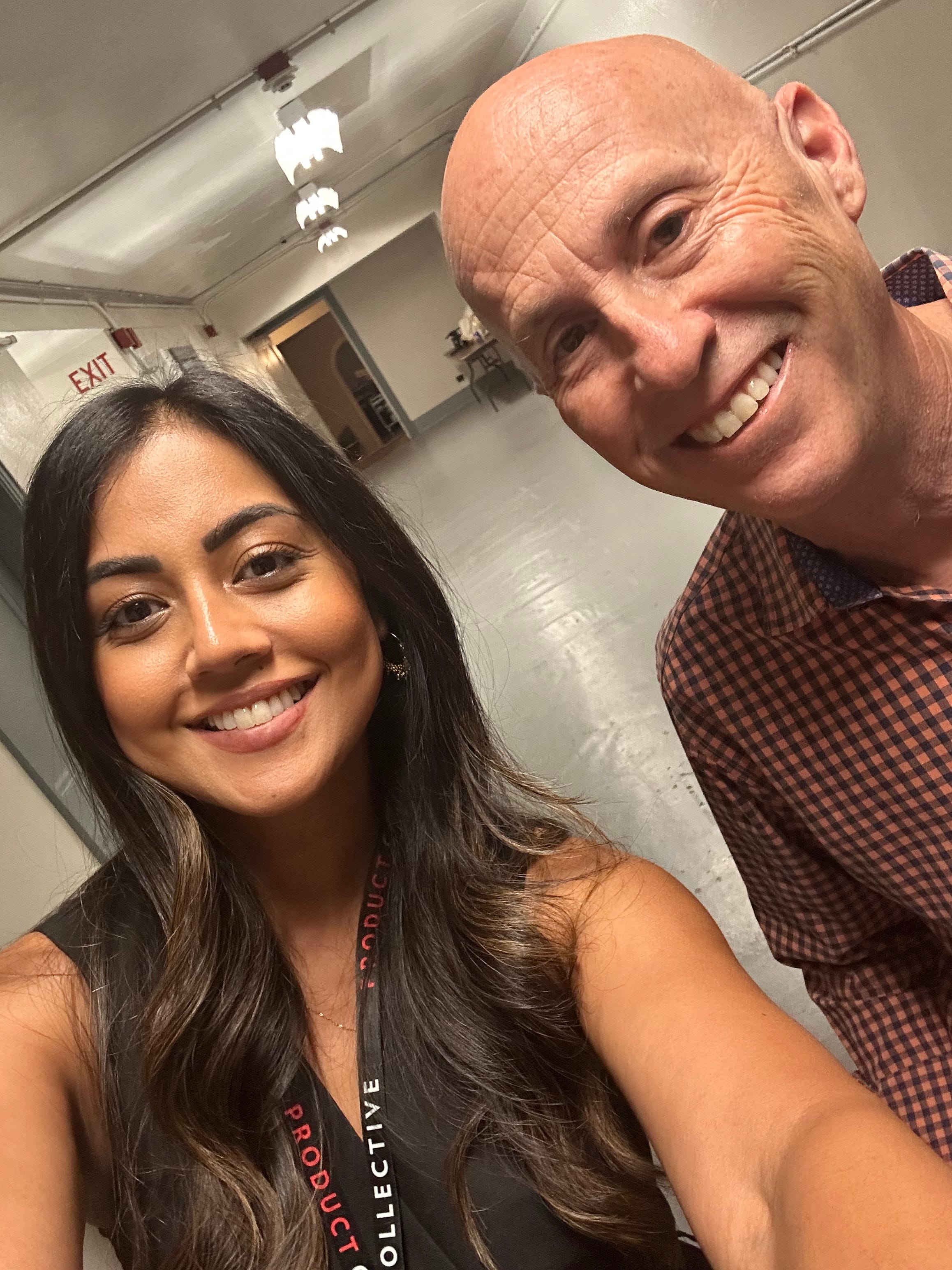
Marty Cagan is the reason so many of us fell in love with this work. When I say this work I don’t mean the job of a Product Manager. I mean learning and applying the craft of Product.
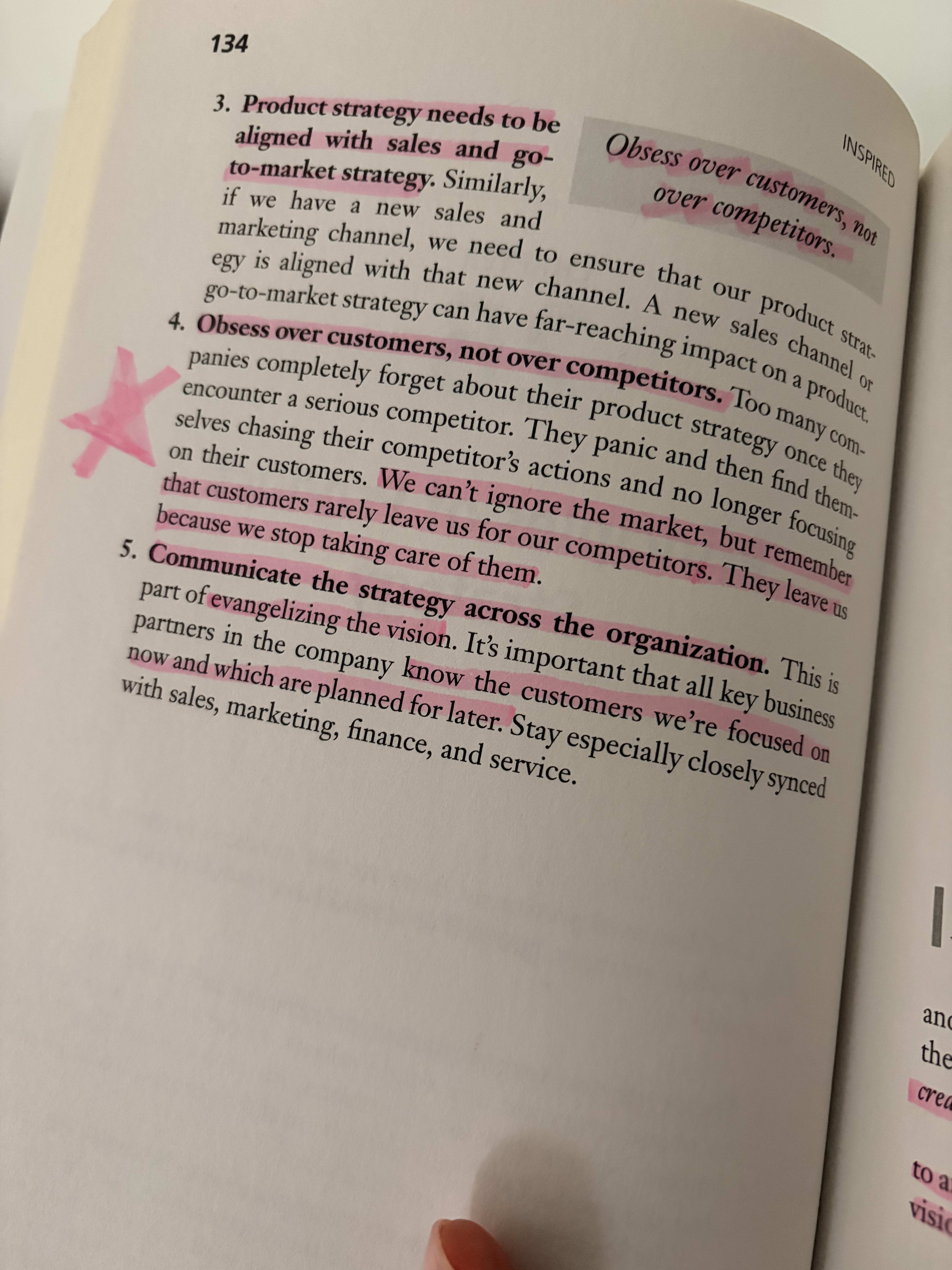
His teachings shaped how an entire generation of product people understand what this role actually is. I took INSPIRED on vacation between companies and read it cover to cover with a highlighter in 2018. There is a line in there I have carried for years: “We can’t ignore the market, but remember that customers rarely leave us for our competitors. They leave us because we stop taking care of them.”
The proof :)
When I reached out to ask if he would sit down with me, I fully expected a polite no. He said yes.
We talked for over an hour about his father, about him working at some of the best companies that set the bar for product success, about what AI is actually changing and what it is not, about the culture problem that nobody wants to name, and about why the thing that gives him the most hope for this community is the same thing it has always been: the people in it who genuinely care.
Here is how the product heart of Marty Cagan came to be.

Education and Professional Highlights
Currently: Founder, Silicon Valley Product Group (SVPG). Coaching, writing, speaking, and advising. Founded in 2001.
Before that: SVP Product and Design at eBay. VP Platform and VP E-Commerce at Netscape, working directly for co-founder Marc Andreessen. Software developer and engineering manager at HP Labs for ten years. Three major companies in a row, each bigger than the last.
Books: INSPIRED: How to Create Tech Products Customers Love (2008, second edition 2017). EMPOWERED: Ordinary People, Extraordinary Products (with Chris Jones). TRANSFORMED: Moving to the Product Operating Model.
Education: B.A. Computer Science and Applied Economics, UC Santa Cruz, 1981. Stanford University Executive Institute, 1994. Learned to program at age seven.
Currently based: Colorado - making his way back to Cali after 15 years.
His father: The first person in the United States to earn a PhD in computer science. Started as an MD before the NIH funded him to go back to school because they believed computers were the future. Published the first book on database management systems via Wiley.
Where He Came From
Before SVPG. Before INSPIRED. Before Netscape and eBay and HP Labs. There was a little kid running around a university computer center in a small college town, because his father was going back to school.
Marty’s father made a remarkable decision. He was an MD who became convinced that computers were going to change everything. The National Institutes of Health agreed and paid for him to pursue a PhD in what was, at the time, a program that barely existed. Though there were many computer scientists around, they had graduated from electrical engineering programs. As far as anyone can verify, Carl Cagan was the first person in the United States to earn a doctoral degree in computer science. He went on to become a professor, and along the way he published the first book on database management systems through John Wiley and Sons, the same publisher that would one day publish his son’s work that changed the way we build.
Marty was six when his father started the program and ten when he finished. Which meant that for the years in between, he got to grow up inside a university, surrounded by people who thought about computing as the frontier of what was possible.
His father taught him to program at seven. At the time, Marty told me, this was genuinely unusual. Today, as some of us parents know, it is common. Back then, it was not. And what it gave him, more than any specific language or skill, was a mental model that stayed with him for the rest of his career: that you can make computers do cool things. That there is no limit to what those things might be. That you should not be afraid of the machine.
“It wasn’t even a question when I went to college. I had already known four programming languages. To me it was just more like a really fun thing. Timing was good.”
He watched his father struggle on the business side. His father started a one-person company, programmed everything in assembly language, which Marty gently describes as a terrible decision, and watched him execute on extraordinary engineering with no business thinking in the mix. He felt the business went nowhere because of this. Marty sat with that. He did not want to repeat it. So when he got to UC Santa Cruz and discovered that there was no business program but there was something called applied economics, he signed up. He did not plan on a double major. He just kept taking the courses until someone pointed out he had one.
He graduated in 1981 and started his career at HP Labs.
None of the rest of it was planned either. We can see the pieces assembling themselves in real time. The kid in the computer center. The programming languages at seven. The father who knew the technology and missed the business.
By the time Marty got to HP, he already understood that the craft and the commercial were not separate things.
They were the same thing, and someone had to hold both.
How Product Found Him
Marty spent ten years at HP Labs as a software developer and engineering manager, and he describes it the way people describe a place they did not fully appreciate until they left. HP at the time had the reputation Google has today: considered the most innovative company in the world. What he did not know until he got somewhere else was how unusual the culture was.
“Every single day I had at least one person assigned to help me get better at my job. And I thought everybody had this. It wasn’t until after I left that I realized almost nobody has this advantage.”
If he wanted to learn design, they arranged for a designer to coach him. If he wanted to understand product management, they found someone. It was not a perk. It was the culture. Coaching was how HP made people better, and making people better was how HP made things worth using.
He also spent part of his time at HP in the Software Technology Lab, which was led by a brilliant researcher from MIT named Ira Goldstein. And he worked in the AI group. He mentioned this almost as an aside, in that way people mention things that seem obvious to them in retrospect: he has been thinking about artificial intelligence for more than forty years. What is happening now is not new to him. It is just finally arriving.
For those of you who know the history of Product Management, you know that HP was one of the earliest to adopt the right mindset and weave certain things into their culture. This includes deeply understanding the customer, following in P&G’s footsteps, and formalizing the role of the PM, separating engineering from business and customer focused individuals. HP ended up delivering to the world some of the best minds in the business, Marty Cagan being one of them.
After HP came Netscape. He was there for the birth of the internet, working directly for Marc Andreessen, building the infrastructure the whole world would eventually run on. After Netscape came eBay, two years as SVP of Product and Design during one of the wildest periods of growth in the industry’s history. By his own account it was intense. Pretty much seven days a week. No balance.
And then it was suddenly more intense, and in the best way for his personal life.
He and his wife had adopted two babies. He was exhausted after more than twenty years of building at that pace. He wanted something different. He thought maybe he would take a year, write a book, share some of what he had learned. It was not supposed to become a twenty-plus year practice that would reshape how an entire industry thought about its work.
“I was in the right place at the right time, especially at Netscape. Because of that, a lot of people were calling me and saying, can you come talk to our team? And I realized maybe there’s something there. Maybe it’s not just an informal thing. Maybe there’s a real need to share these things.”
He started writing, giving talks, and spending time with teams. INSPIRED came out in 2008. And it just kept going.
What He Actually Believes About This Work And the Best Product People
Some of the best things Marty said in our conversation were not the things most people would expect to pull from a conversation with Marty Cagan. Not the frameworks. Not the models. The things underneath them.
He has said before that product management is the most important non-executive position in a company. He also said it is a tough career and he does not recommend it to everyone. And rather than treating those as contradictory, he held them together carefully.
The difficulty is not the hours, though the hours are real. It’s the accountability. When you sign up for outcomes - not just outputs - when you genuinely care about whether the thing you built solved the problem you were trying to solve, that weight does not go away at the end of the sprint. The best product people he knows, he said, work incredibly hard. But they do not feel like they are being forced to. They feel like they are finally doing the thing they were supposed to do.
“I was taught very early on as a first-time manager that if you have to tell your people to work more, you failed. I really think that’s true. I see the power of inspiring people and empowering them over forcing or coercing them.”
He said something else about people that is incredibly important. He told me that he occasionally meets someone who he is completely certain is going to do extraordinary things in product. And he is usually right. What is the quality that makes him certain? He said he cannot fully articulate it. But here are a few things he notices:
The people who “have it” tend to have agency.
These people are not afraid to think.
These people believe in their own judgment even when they are uncertain about everything else.
And then he said: “Often they need to be convinced. Often, especially women, they do not believe they can do it.”
Marty, we feel seen.
He described an anti-pattern he has seen repeat throughout his career: someone sitting in front of him with all of the qualities of an exceptional product leader, who does not believe it is possible for them. And him saying, with complete conviction: “You are so much better than you think. Please trust me on this. You are going to love this work like you have never loved a job before.”
I thought about Elena Verna when he said this. Two weeks prior she had told me the same thing from the other side of the table: the imposter syndrome she carried for years, the realization that the confidence she was comparing herself to was often a performance, and how the doubt eventually became a superpower. It is the same story told from two different vantage points. And it keeps being true.
Build to Learn vs Build to Earn
This is the framework Marty has been writing about most recently, and it is the one that I think really matters in this moment. He did not invent the phrase. Jeff Patton did, years ago, and Marty wrote it down the first time he heard it and kept it. In the age of generative AI, he said, it finally has the resonance it deserves.
The core idea is simple. In product discovery, you are building to learn. You are trying to discover a combination of technology, experience, and business constraints that actually works. You are building prototypes, not products. You are testing against risk, not shipping against a roadmap. The purpose of what you are making is to find out if you should make it at all.
In product delivery, you are building to earn. You are building something commercial, something customers can depend on, something that needs to perform and scale and be secure and work as advertised. The skills, the tools, the mindset, all of it is different.
What AI has changed, he said, is not the distinction between these two things. It has made the distinction more visible and more urgent. Because now that building is cheap and fast, it is finally clear to everyone that the bottleneck was not the engineers. It was always knowing what was worth building.
“Before, if you talked to a CEO three years ago, they would say, give me a break. 90% of our costs are engineers. It takes forever to get anything launched. Now it’s pretty clear. It’s not the engineers after all. It’s what they’re trying to build. Which is the hard part.”
He is also watching something happen right now that concerns him. A lot of product managers have simply been using these amazing new tools to just speed up the process they’ve always used (which SVPG refers to as the “project model” and “feature teams”). They are using gen AI to aggregate feedback, generate roadmaps, and generate PRDs - essentially just accelerating their old way of working. Yet they are confused when output increases but outcomes remain unchanged.
He said it directly: if that is what you think your job is, you have just automated your job out of existence. You have shown your manager that you are not necessary. That is not the contribution.
The contribution is product sense.
The judgment to know what is worth building, what is worth testing, what the customer actually needs even when they cannot articulate it. That is learned. It takes time. It requires immersion in data, in customers, in the market.
And it is the only thing that AI cannot do for you.
On AI, Coaching, and What Is Actually a Game Changer
Marty has been thinking about artificial intelligence for more than forty years. He said this almost offhandedly, mentioning that he studied AI at UC Santa Cruz as part of his computer science program, that he worked in an AI group at HP Labs, that the problems he was working on then are the problems everyone is working on now. The difference is less about the arrival of the tools we’re all leaning into, and more that the technology is far beyond the primitive AI technology that existed a few decades ago. The technical progress and breakthroughs that have enabled today’s generative AI are incredible.
He is genuinely excited about two things in the current moment. The first is what AI is doing for delivery: in the hands of knowledgeable engineers, tools like Claude Code are making it possible to build production-quality software in ways that were not possible before. He thinks we are still in the early innings of this and that the progress will continue.
The second is prototyping for discovery. The four types of prototypes have always existed, but the calculus has completely changed. The live-data prototype, which used to be the most expensive and time-consuming kind, is now one of the easiest to create. For product managers who are building to learn, this is, in his words, “manna from heaven”.
But the thing he is most excited about, and he said this with a clarity that surprised me, is AI as a coaching tool. He has been spending time in Africa with his partner Christian Idiodi, who runs the largest product conference on the continent, Inspire Africa, pulling in a thousand people each year. What he sees there is extraordinary talent with almost no access to coaching, no managers who have worked this way before, no infrastructure for developing product sense.
“The idea that anybody in the world - if you’re in Lagos, Nigeria, or in Kigali, Rwanda, wherever you are - and you’ve got a phone with an internet connection, you can get a very good seven-by-24 product coach to teach you. That’s a game changer.”
Even in the best companies, he said, a product person might get one coaching session a week if they are lucky. AI makes that available at any hour, in any context, to anyone with a connection.
That is the thing he is most optimistic about. Not the speed of shipping. The democratization of becoming.
The Book, His Father, and What Stayed True
INSPIRED came out in its first edition in 2008. Marty told me that when he went back to write the second edition ten years later, he assumed it would be a revision. A few updates, some new examples.
There is not a single page from the first edition in the second. He rewrote everything. Not because the principles had changed, but because the techniques had evolved so dramatically that everything around the principles needed to be rebuilt.
I naturally asked about a third edition now. I think the most quietly confident thing he said in our entire conversation was this: Up until a couple of years ago, INSPIRED was inspiring for a lot of people, but something they felt they could not actually do. Today, he is hearing something different. Today people are saying: that is our playbook.
YES.
The tools have finally made possible what the principles always described. And INSPIRED, by something that looks like luck but is probably more than that, has never been more relevant.
I asked him what he thought his father would make of all of it. The books, the community, the decades of work. He was quiet for a moment and smiled. Then he said his father got to see a chunk of it, which was good. That he liked what he saw. That even though his father was a hundred percent on the engineering side, he had learned his lessons about what lies beyond engineering. And that he was glad, Marty thought, to see his son carrying those lessons into the world.
“I’m very grateful to him that he showed me this path.”
I told him with full feeling that we are all grateful for that.
The People Who Changed Everything
When I asked Marty who he wanted to thank, he resisted the easy answer and gave the specific one.
He talked about HP, where the culture of coaching made him who he is as a developer and as a leader. About Netscape, where working for Marc Andreessen and alongside Ben Horowitz gave him a front-row view of what product excellence actually looks like at speed. About Pierre Omidyar, the co-founder of eBay, whom he genuinely liked and learned from during some of the hardest years of his career.
And then he named the person who rarely gets named. Chris Jones, his partner at SVPG. Co-author of EMPOWERED. The person who has read every draft, pushed back on every piece of content, found every blind spot for more than twenty years.
“It’s really good to find somebody who thinks differently than you when you’re a content creator. Chris thinks totally differently than me. I write a draft and I send it to him and I don’t know what he’s going to say, but he always comes at me with something I didn’t see. I can’t believe I missed that. And that happens every time.”
If you have read something from Marty and thought it was good, Chris probably has his fingerprints all over it. He shared this proudly with me. Not because Marty cannot write - but because the best ideas are not solo performances. They are the result of someone who can tell you what you need to hear, with enough care that you actually hear it.
That is also what the best product culture looks like. Not a leader who has all the answers. A leader who has built the space where someone can say: this is not right, and here is why. The yes-people rise in cultures where that space does not exist. Where being challenged feels like a threat instead of a gift. Marty has spent more than twenty years building one of the most influential bodies of work in this industry. And he is the first to tell you that the outcome is better because someone he trusts has never been afraid to tell him he is wrong. That is not a small thing. For most leaders, it is the hardest thing. And it is exactly where the best cultures separate from the rest.
What He Most Wants This Community to Understand
I asked Marty what he most wants this community to understand. Not read or know abstractly, but actually internalize.
His answer was product sense. And his argument was that too many people believe it is something you either have or you do not. That it is intuition. That it is innate.
He does not believe that at all.
Product sense comes from immersing in the data, immersing in the space, immersing with customers. And eventually, what feels like intuition is really just accumulated knowledge. You’ve assimilated so much that you can understand where things are going and why. That’s what product sense is. And it is absolutely a learned thing.
Developing it takes time and it takes deliberate effort. It takes getting close to customers in a way that is not optional and cannot be delegated. And it is, he said, the foundation of everything else. The techniques are learnable. The tools are learnable. The frameworks are learnable. Product sense is the thing underneath all of it that makes the rest of it actually work.
I thought about the forty years he has been in this. The kid in the computer center. The college kid who just knew that balance was necessary in his majors. The developer at HP who thought everyone got coached every single day. The executive at Netscape and eBay who built things that changed how the world communicated and bought and sold. The person who decided to spend the second half of his career teaching and giving back rather than building.
All of it is an accumulation. All of it is product sense, built over a lifetime of immersion.
We could all be so lucky.
You can find Marty Cagan and the full SVPG library at svpg.com. INSPIRED, EMPOWERED, and TRANSFORMED are available wherever books are sold. If you have not read them, start with INSPIRED. Buy a hard copy and a good highlighter.
Marty, thank you. For the interview, for the books, for always being authentic and outspoken on how PMs should do better, and for two decades of showing up for this community.