

We started our conversation talking about the Knicks.
It was the morning after the largest comeback in NBA finals history. New York had been down by double digits. Most people had given up. And then, in very New York fashion, my team did not. I was working in Claude that night, looked up at the right moment, and my kids somehow slept through what happened next in my house (and again a few nights later because yes, we took the whole thing).
Christian was watching game four as well. We talked about the city erupting, about friends posting videos from across the river with their phones out the window so you could hear the celebrations from New Jersey. I had family at the Garden and felt so much pride. And what struck me, even before we got into the interview, was how much joy there was in that shared moment. Two people from very different places, both rooting for the same city to win.
There is something about watching a place you love succeed that is its own kind of homecoming. That feeling turns out to be at the center of everything Christian Idiodi does.
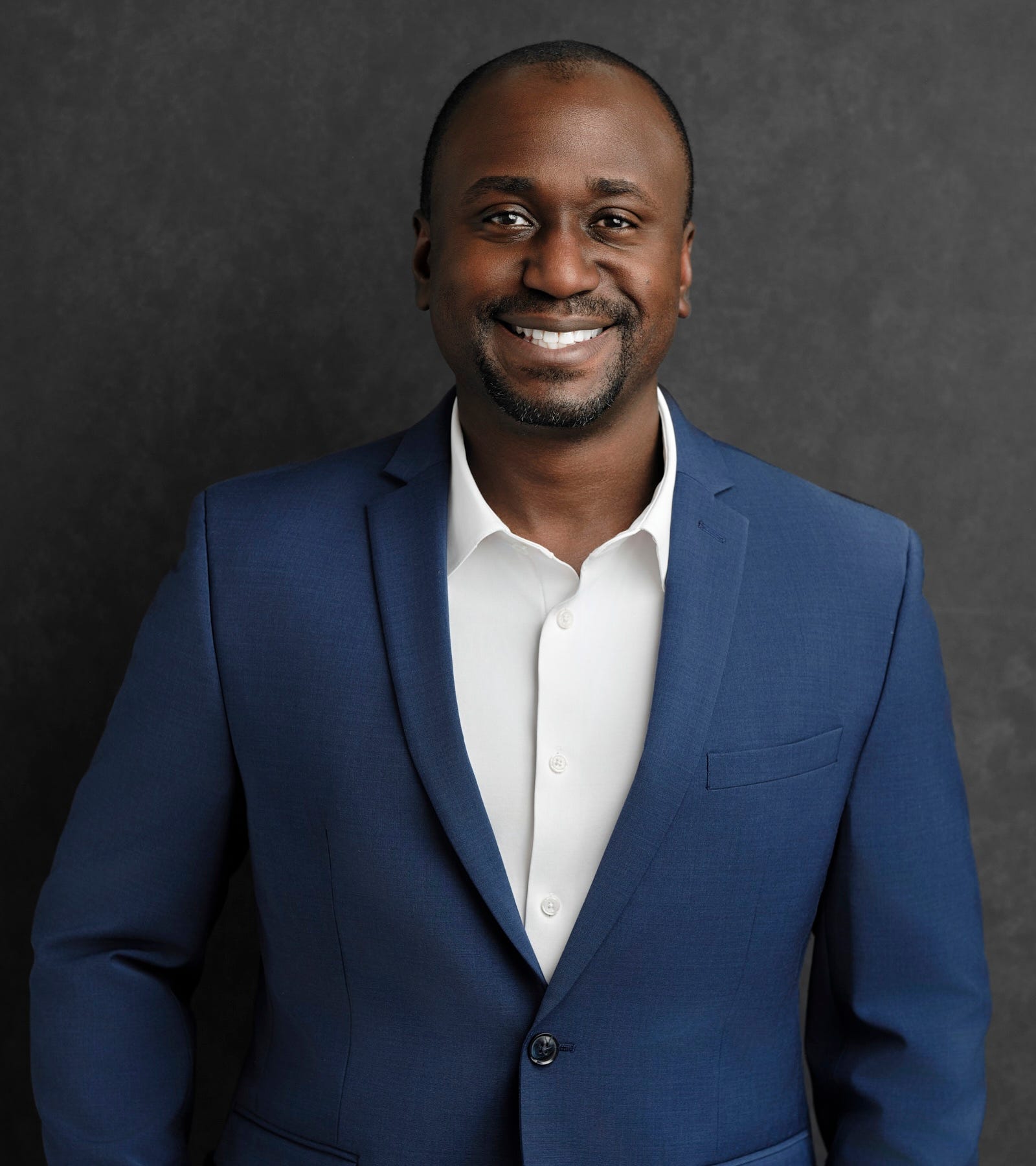
He is a Partner at Silicon Valley Product Group, co-author of TRANSFORMED, host of the SVPG podcast Product Therapy, and one of the most respected voices in product management anywhere in the world. He has built more than two hundred products across multiple industries. He has coached teams at Microsoft, Starbucks, McDonald’s, and Squarespace, and was a professor at Virginia Commonwealth University.
And he is the founder of the Innovate Africa Foundation, which brought more than one thousand product leaders from thirty-one African nations to Lagos for the inaugural Inspire Africa Conference in September 2023.
He was born in Calabar, Cross River State, Nigeria.
This is his story. And it is not like any other in this series.
Education and Professional Highlights
Currently: Partner, Silicon Valley Product Group (SVPG). Coach, advisor, and trainer to product leaders and teams globally.
Books: Co-author of TRANSFORMED: Moving to the Product Operating Model with Marty Cagan and SVPG partners. Host of the SVPG podcast Product Therapy.
Companies shaped: CareerBuilder, Merrill Corporation. Clients include Microsoft, Starbucks, McDonald’s, Squarespace, and many others.
Teaching: Adjunct professor of product management and innovation, Virginia Commonwealth University. Mentors two student-led startups annually through SVPG.
Foundation: Founder, Innovate Africa Foundation. Chairman. Inspire Africa Conference, Lagos, September 2023: 1,000 plus product leaders, 31 African nations. Scholarship fund established for attendees.
Education: B.A. Psychology and Community Building, Emory University. Dual MBA and MPM, Keller Graduate School of Management.
Originally from: Calabar, Cross River State, Nigeria.
Where He Came From
Christian grew up in Calabar intending to cure disease. Not metaphorically. His childhood goal, the thing he told his mother over and over, was that he was going to cure all diseases. He wanted to go into virology. He hated what malaria did to people. He hated HIV. He saw suffering as a problem to be solved and medicine as the most direct path to solving it.
His family believed, philosophically, that a child should complete their first degree within their own culture. America was not initially a part of the plan.
Then two things happened. He was accepted into a gifted program at school, a kind of United Nations initiative for students with the highest scores, which offered direct placement to universities in the US. Through this program America became a real option.
Still, he was not convinced. He visited Harvard in the winter. He described it as the most miserable visit of his life. Cold air coming in one ear, out the other, eyes running. He told his parents: “America is cold. I am not going.”
His father visited a friend in Atlanta, noticed the weather was warm, and came back having spoken to people at Emory University about his son. Someone matched his Harvard scholarship offer. That is how Christian ended up at Emory, and the United States.
He arrived intending to be pre-med. Then, in his junior year, he was nominated for a fellowship program run by the fashion designer Kenneth Cole. Cole had created a program pairing twenty students with celebrity advocates working across social causes: environmental issues, homelessness, human rights. Christian was paired with Harry Belafonte in his first year and worked alongside Robert Redford after.
It changed everything.
“I started to find interest in a whole bunch of other things. I cared about impact and change. I was always fascinated by what people do, how groups work, how communities change. That prompted me to go get the community building and social change degree. Instead of studying medical school, I decided to take a year off and travel the world. And I’m still doing that.”
Christian did not become a doctor. He became something harder to name and more difficult to replicate: a person who understood, from very early on, that the problems he cared about most were human problems, and that whatever career he built would need to be in service of solving them.
The Competition, the Check, and Malawi
Christian stumbled into product management the way he has stumbled into most things: by paying close attention, by being the most curious person in the room, and by doing something with what he found.
He was working at CareerBuilder, still early in his career, when the company ran an internal entrepreneurial competition. Employees could submit ideas. Finalists would pitch to the board. The winner would receive funding and time to actually build something.
He entered the competition, and before he walked into the final presentation, the board chairman found him and asked how to pronounce his last name. Christian told him. The chairman said: “Good, because I do not think people will ever forget it.”
He walked in and changed his presentation on the spot. He had prepared a pitch. Instead, he talked about his values. About showing up with integrity. About what it meant to him to do this work.
He won. The prize was a significant cash prize, the biggest check he had ever held at that point in his life. He was twenty-two years old, making somewhere between eight and fourteen dollars an hour before that moment. Christian donated the entire amount to help a village in Malawi. He had been reading about the Millennium Promise and its work getting villages out of poverty across Africa.
He did not know what else to do with money at that scale. So he gave it away.
The CEO asked Christian about it in their next meeting, casually, expecting to hear he spent the prize on a sports car or a vacation. When Christian explained what he had done, the CEO flew with him to Africa to see the work. When he came back, he committed his own money to the cause and started a company-wide program through which about fifteen employees a year would travel to Africa to volunteer, fully funded.
“That was the great side of the competition. It was the first time I unlocked what you could do with success and what you could do with an identity. That shaped me. But the actual work itself, making something work for customers, for a business, for sales, for operations, that was real. That was hard. I called my mother more than once to say I think I’m going back to medical school.”
This is the part where I started chuckling… Product management being harder than med school is something my PMs and I have joked about many times. Of course, at the end of the day we remind ourselves that we’re not saving lives. Still the pressure and compounding needs feel so intense at times it’s easy to say most things are probably easier to manage!
He did not go back to medical school. But he did fail. After his first two products at CareerBuilder were both successes, he became head of innovation and was given essentially unlimited license to keep going. He had seventeen consecutive failures over the next two and a half years. He cost the company approximately two and a half million dollars in bad experiments.
He did a lot of soul-searching about what had changed. I want everyone reading this to absorb what he shared, and let it sit with you and echo when you feel you’re on shaky ground as you progress in your product careers: He had gotten further from the customer. He had stopped being curious. He had started acting like someone who had the answers instead of someone who was genuinely trying to find them.
He moved from Chicago to Atlanta to be physically closer to his engineers. He went back out to spend time with customers. Since then, his product work has been grounded in a very different discipline across the over 200 products he’s built: staying close to customers and evidence.
What the Job Actually Is
I asked Christian about emotional intelligence - something he has spoken about publicly as the most undervalued skill. We also talked about arrogance - the most common killer of transformation.
He described a pattern he sees everywhere: leaders who say they want a culture of innovation and empowerment, who invite product teams into discovery, but who have already decided what the answer is. Discovery, in those environments, becomes a process of confirming what the executive already believed. And when the team comes back with evidence that contradicts that belief, the leader becomes defensive. Resistant. The team learns very quickly that the safe thing is not to learn. The safe thing is to comply.
“Once that happens, you don’t have a product team anymore. You have delivery teams with product titles. And emotional intelligence matters because product work requires humility. You can imagine if you’re in your early twenties and you become a boss. Very quickly I could see how I lost the secret to my initial success because I got into the arrogance and ego of what bosses do. They have the right answer. They make decisions from a distance. You stop being able to say things like ‘I don’t know. Help. I was wrong. I’m sorry.’”
This struck a chord with me. It’s my belief that safety is non-negotiable yet it’s so difficult to find the companies that truly build that type of culture. When product people, especially, trade safety for compliance, the ones who suffer are customers.
He connected what he said back to his own failure at CareerBuilder. The secret to his early success was not talent. It was the clarity that he did not know anything, combined with the willingness to be curious, to be wrong, to be close to customers. When he got a title, he lost that. And the products stopped working.
He said something about managers as well that is rarely said clearly.
“Once you become a boss, there is an unwritten magical rule that descends: you can no longer say the vulnerable things. I do not have the information. I screwed up. That rule hurts product organizations more than almost anything else. Because the discipline of product management, the actual discovery work, has to be rooted in humility or it is not discovery at all.”
Twenty Dollars in a Lagos Internet Cafe
This is the story that tells you everything about what Christian is actually building and why. Truth be told, it was so difficult to not get emotional while he shared this.
He was in Nigeria visiting during his college years, at a time when people used internet cafes to get online. He went in late at night to send an email for school. The place was packed. He was waiting for a computer to open up.
Next to him was a young boy, maybe a teenager, replicating a fake central bank note pixel by pixel. Running the kind of email scam that Nigeria became infamous for in that era. Christian watched him work and then asked: why are you doing this?
The boy explained that his uncle made him do it. That he had to produce a certain volume of work each day. That the food he got that night depended on what he brought back. If he doesn’t do this, he does not get to eat.
Christian gave him twenty dollars. Everything he had in his pocket.
Boy: “What is this for? “
Christian: “You should go eat”
Boy: “No, this is not to eat. I am not going back to my uncle. I am going to use this to start a company.”
The boy took the twenty dollars and did not go back to his uncle. They exchanged emails and communicated over the next couple of years: “Hey, I’m working now in a shop.” “Hey, I’m learning computers.” And then silence for a long time.
Years later, Christian went back to Lagos and tracked down that email address. The boy had three shops. A computer repair business. A computer tutoring operation. A small enterprise built from nothing and twenty dollars and one moment when someone looked at him and saw something other than a criminal.
“He said it wasn’t the twenty dollars. It was that somebody looked at him and the first thing they saw was not what he was doing wrong.
They saw opportunity, misguided.
And my whole vision in Africa is that there are millions of kids growing up without the opportunity to leverage their skills and talent. I do it for just that one person.”
That is the mission. Not the conference. Not the numbers. Not the metrics. The one person.
Going Back With SVPG
When Christian brought the idea of doing product work in Africa to his SVPG partners, he did not know what to expect. He described it as being just a boy with a dream about something.
His partners said they were in before he finished the sentence. They offered financial support, time, planning, and brainpower. All of it, immediately.
Marty Cagan was among them. He has spoken publicly about what those trips did to him. In my own conversation with Marty for an earlier piece in this series, he described the talent he saw as extraordinary, and said what was missing was not ability but infrastructure, coaching, and access. Christian, who has known Marty for many years and credits him as one of the most significant people in his career, said Marty saw something in him before he could see it in himself.
The first trip back with SVPG started at Christian’s childhood elementary school. Before they arrived, he had funded the construction of a computer lab there, with machines and internet access, meant to serve not just students but the whole community. When he contacted the principal to confirm the visit, the principal said: this is wonderful. But our biggest problem right now is that the students do not have chairs.
So they got chairs.
At the school, his SVPG partners walked through the library, a mat on the floor and a few books, watched students learning from a chalkboard, and kept looking at Christian. He said he could see what they were processing: that he had come through all of this. And that what they were being asked to participate in was the creation of more people like him.
“I felt pride in some ways, but a deep sense of responsibility. My framing shifted. It was not about bringing the best of Silicon Valley to Africa. It was about connecting what already exists here with coaching and community and opportunity that can scale. That is what was missing. Not the talent. That was never a question for me.”
Lagos, One Thousand People, Thirty-One Nations
The Inspire Africa Conference in September 2023 in Lagos brought together more than one thousand product leaders from thirty-one countries across the continent. All six SVPG partners attended. The average Nigerian earns approximately thirty-five dollars a day, and the conference fee was the difference between people being in the room and people being left out. So, a scholarship fund was established.
Christian did not describe it as charity. He described it as access.
When he stood in that room on the first day and looked around at who had come, he said he had a moment of wondering if it was real. People had traveled across the continent, which in Africa is genuinely painful. They had sacrificed to be there, and the hunger in the room was unmistakable.
Christian told me about a twelve-year-old girl who was the CEO of a healthcare company. A nine-year-old robotics engineer. Marty told him there was a student who asked him the same question that a Google engineer had asked him the week before at his master class. The talent was there. It had always been there.
“Once you see it and you see that talent in one place, you cannot pretend that the problem is talent or people. You have to build systems around this talent. Enable their reach. That first day confirmed the mission for me. We don’t need pity. We need access, coaching, capital, community. A chance to build within our own context.”
He also spoke about AI in this context with such clarity. Africa is not trapped by the legacy assumptions that make this moment so disorienting for people who built their careers on the old playbook. The continent has a history of leapfrogging in technology, skipping over infrastructure that other places built and never needed to repeat. AI, he said, is the great equalizer. For the first time, people in Lagos have access to the same tools as people in Silicon Valley. The question is what they do with that access.
“Africa’s constraint has always forced creativity. We’ve always been close to problems. We are so good at describing problems. If we combine that creativity with strong product judgment and AI capability, then the next generation of African builders will create products the world cannot even imagine.”
What AI Is and Is Not Changing
I asked Christian what he wants the broader product community to understand about this moment. He is on a speaking circuit across Europe for weeks, making the same argument everywhere he goes.
The discipline has not changed. AI does not change what you need to build a great product. It changes what you can do with the time you have and the capabilities you can access. But it does not change the fundamental question of who you are building for, what problem you are actually solving, or whether the thing you are making creates genuine value for a human being.
He used a photography analogy that is so precise. The iPhone gave everyone access to a good camera. It did not make everyone a professional photographer. You can see the difference between five hundred pictures taken by someone who just has a phone and the first shot taken by someone who knows what they are doing. The same is true of product management. AI is making it easier than ever to produce output. Which means we are about to see more product failure than ever, not less, because people are going to mistake building fast for building right.
“The discipline has always been about good judgment and product sense and understanding what makes good for humans in a world that is ever changing. If I were advising people in this age of AI: focus on the competencies that truly matter. Your product sense. Your deep understanding of the problem and the customer and the business. The empathy. The taste and discernment. That is the Michelin star chef versus someone just cooking. It is what makes a good meal. We need to get back to our roots.”
Christian dropped lines during this conversation that were so deep, I only hope you can feel his passion when you read this piece. He said something that I want to put down carefully here. People who used to confuse output with outcome are about to find out the difference in the most direct way possible. You can now build in one week, in two days. And if nothing changes, if there is no new revenue, no new customers, no meaningful shift in the outcome you are trying to drive, it will become clearer than it has ever been that shipping was never the problem. I cover what the problem is here.
The People Who Changed Everything
Christian thanked his parents first, and at length. His partners from SVPG had met them in Calabar, had seen where he grew up, had sat with his family for lunch before any of the conference work began. He said when you meet his parents, you understand him immediately. Their warmth, their generosity, their belief in service as a fundamental obligation.
“My father always says service is the rent you pay for your accommodation on earth. I am a product of a tree that was full of love and heart. It is hard to be a bad fruit if the tree itself is good.”
He thanked the African product community for giving him urgency. For making the work tangible rather than theoretical. For reminding him, every time he goes back, that access matters and coaching matters and none of this is abstract.
And he thanked Marty Cagan. He was specific about why. He said Marty saw something in him before he could see it in himself. After one of his very first workshops, he received a long email from the SVP of a major bank. The man had been in the industry for thirty-six years and said he had only a few times in his life seen someone so perfectly designed for what they were doing. Christian said he could not see that in himself at the time. Marty could. And the platform, the trust, the friendship that followed gave him the foundation to build everything he has built since.
He said he does not thank people enough. He said it plainly. But, do any of us, really?
What It Costs to Carry a Mission
I always end with the same question: What do you wish someone would just ask you that nobody ever does?
Christian paused, and said he wishes someone would ask him what it costs him to carry the mission.
People see the conference. The stage. The books. The travel. The ideas. They see the impact and the reach and the numbers. They do not ask what it takes to hold all of that, what it does to the rest of a life, what you have to give up or give over in order to do something this personal at this scale.
“When something is personal, when you’re so close to it and you have a passion for it, there is a cost. To my family. To my well-being. To the mission itself. I am still learning to not do everything myself. I am still learning about building people and systems and communities and legacy. Things that can keep going in the world without me. But there is a whole lot to carry. And I am still learning how to carry it well.”
I sat with that for a moment after he said it. It is the most honest thing anyone in this series has offered at the end of a conversation. It’s not a principle, and it’s not advice. Just: this is hard, I love it, and I am still figuring out how to hold it.
He grew up in Calabar wanting to cure disease. He became a product person who has built two hundred products and coached thousands of teams and flown back to his elementary school with the greatest minds in Silicon Valley to get chairs for children who did not have any.
The mission is the same one it always was. He just found a different mechanism.
And somewhere in Lagos, that man with three computer shops is out there doing the same.
You can find Christian at svpg.com and on LinkedIn. To learn more about the Innovate Africa Foundation and how to support the scholarship fund, visit the links below:
https://www.innovateafricafoundation.org/
https://africapla.com/
https://innovateafricafund.com/
https://www.inspireafricaconference.com/
Christian, thank you. You were the last Spotlight in this series (at least for now), and there was no better person to close it with. The product heart that this whole thing was named for is, in you, exactly what I always hoped it could be - someone giving back.
- Christine Itwaru